Sofa Fabric Guide: Materials That Survive Real Life
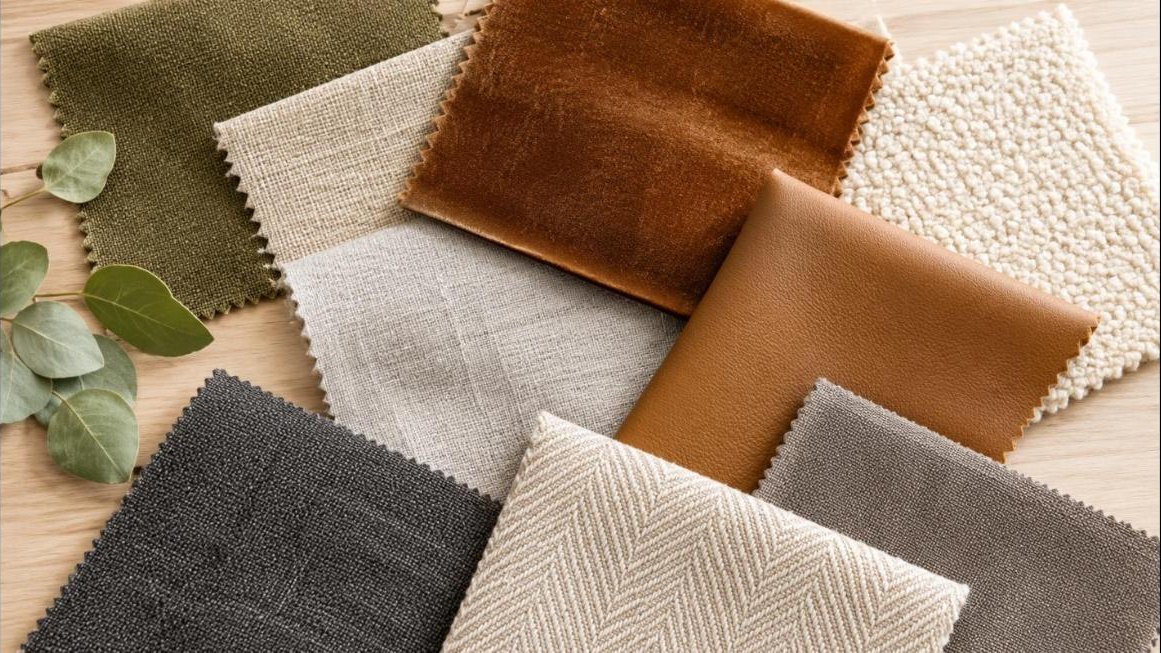
Two sofas with identical frames can have completely different lifespans depending on the cover. Fabric is the part you touch, the part that stains, and the part that decides whether the sofa still looks respectable in year five. Here is how the common options behave once they leave the showroom.
The two numbers that matter
The double rub count measures abrasion resistance. A machine rubs the fabric back and forth until it shows wear. Anything above 15,000 double rubs is considered durable for home use, 25,000 to 30,000 is heavy duty, and commercial-grade fabrics run past 50,000. Reputable manufacturers publish this figure. If a listing does not, ask.
Pilling resistance is rated one to five, where five means no pilling. Loose-weave and short-staple fabrics pill; tight weaves and long filament yarns do not. A fabric can be highly abrasion resistant and still pill badly, which is why both numbers matter.
Performance polyester and olefin
Solution-dyed polyester and olefin are the workhorses of modern upholstery, sold under various performance branding. The colour is added to the fibre itself rather than printed on, so the fabric resists fading and tolerates diluted bleach cleaning on some grades.
They are the most forgiving choice with children and pets: spills bead rather than soak, most stains lift with water and mild soap, and the double rub counts are typically 30,000 or higher. The trade-off is that cheaper versions can feel slightly plasticky and warm to sit on, and very smooth weaves show cat claw pulls clearly.
Linen and linen blends
Linen looks superb and ages into a relaxed, slightly rumpled texture that many people prefer to its new state. It is breathable and cool. It is also the least practical common upholstery fabric: it wrinkles permanently, absorbs liquid instantly, and water alone can leave a ring.
A linen-polyester blend at around 40 to 55 percent linen keeps most of the look with far better stain behaviour. Pure linen belongs in a formal room, a low-traffic room, or on a sofa with washable slipcovers.
Cotton and cotton blends
Cotton is soft, breathable and takes dye beautifully. Untreated, it stains readily and fades in direct sun. Cotton canvas and duck in heavy weights are genuinely durable, while lightweight cotton weaves are not. Cotton blended with polyester at roughly 60:40 is a sensible middle ground and is what most slipcovers are made from.
Velvet
Modern upholstery velvet is usually polyester, not silk or cotton, and it is far tougher than its reputation suggests. Double rub counts of 30,000 to 100,000 are common. It resists pet hair better than most people expect because the dense pile does not let hair work in.
The real issue with velvet is crushing and shading: the pile flattens where people sit and reflects light differently, giving the permanent watermarked look. This is not damage and it is not reversible, so you either like the effect or avoid the fabric. Brushing the pile in one direction after cleaning helps keep it even.
Chenille
Chenille is soft, warm and hides crumbs and minor marks well thanks to its irregular surface. It is a good family fabric in dark and mid tones. Its weakness is snagging: the raised pile catches on claws, zips and rings, and a pulled loop is very visible. Pet households with cats should look elsewhere or accept regular snips.
Bouclé
Bouclé, the looped nubby fabric that dominated recent furniture design, photographs beautifully and feels lovely. It is also the worst common choice for durability. The loops snag on everything, trap dust deep in the texture, and are very difficult to clean without flattening. Most bouclé is sold in off-white, which compounds the problem. Choose it for a bedroom chair, not a family sofa.
Leather
Leather is graded by how much of the hide and its finish remain. Full-grain keeps the complete top layer and develops a patina; it is the most durable and most expensive. Top-grain is sanded and finished, making it more uniform and more stain resistant but less characterful. Split, bonded or genuine leather labels usually mean a lower layer or reconstituted leather fibres on a backing, and bonded leather in particular will peel within a few years.
Leather suits households with allergies because it does not hold dander, wipes clean, and lasts decades if conditioned once or twice a year. It is cold in winter, warm in summer, and shows cat scratches permanently.
Pets, children and sunlight
- Dogs: performance polyester or top-grain leather. Avoid loose weaves.
- Cats: tight flat weaves such as performance polyester or microfibre. Avoid bouclé, chenille and loose linen.
- Toddlers: anything with removable washable covers, in a mid tone that is not solid white or solid black.
- Sunny rooms: solution-dyed fibres only; printed cotton and dark dyes fade fastest.
Practical checks before ordering
Order swatches and keep them for a week. Rub one hard with a fingernail to test pilling, drip water on another to see how it absorbs, and look at all of them in your own evening light. Ask whether the cushion covers unzip and whether the manufacturer sells replacement covers. And whatever the salesperson says, read the care code: W means water-based cleaners, S means solvent only, WS means either, and X means vacuum only, which is a fabric to avoid in any busy home.

Written by gautam995576@gmail.com
Furniture buying editor focused on practical room planning, material checks, and clear decision guidance.
Related furniture guides
Sleeper Sofas and Futons: An Honest Comfort Comparison
Pull-out sleeper, click-clack futon or a daybed? A frank look at how each one sleeps, how each one sits, what they cost…

Sectional Sofa Buying Guide: Sizes, Configurations and Real Costs
How to pick a sectional that actually fits your room: standard sizes, chaise vs corner configurations, what each price tier buys you,…
Kids’ Furniture Safety: A Practical Guide for Family Homes
The furniture risks worth taking seriously in a home with children, from tip-overs to materials, and the simple steps that keep a…