Leather Sofa Guide: Grades, Aniline Finishes and Real Care
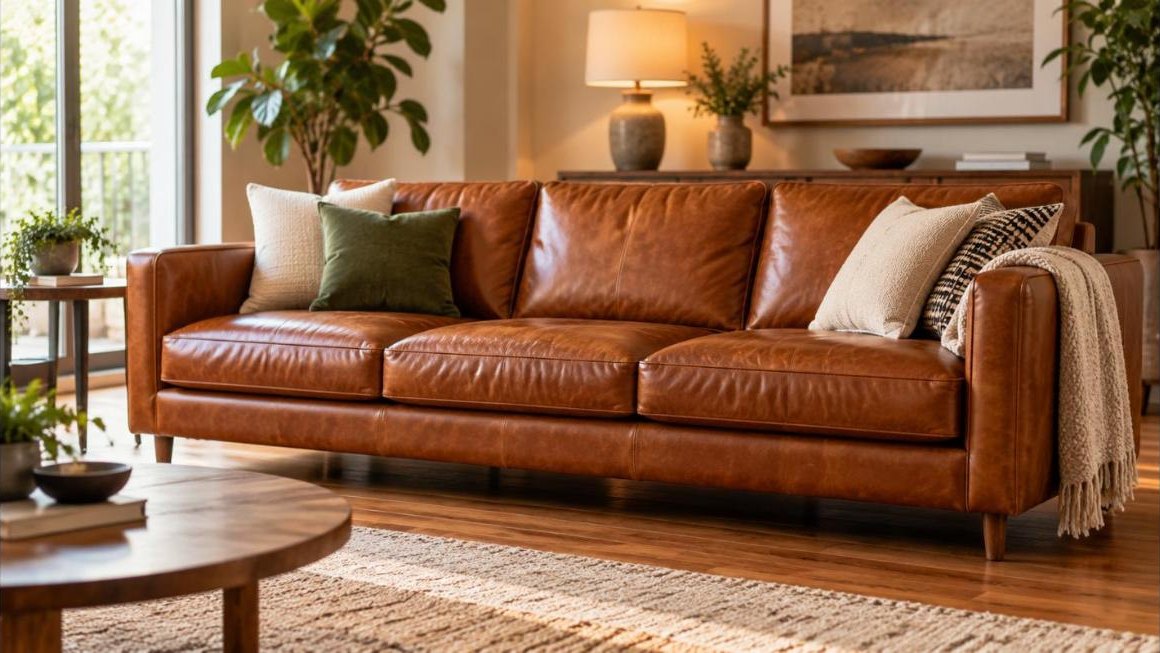
Leather is the only common upholstery material that can genuinely improve with age, and also the one with the most misleading labelling. Terms like genuine leather and bonded leather sound reassuring and describe some of the worst products on the market. Here is what the grades actually mean.
The grades, from best to worst
Full-grain uses the entire top layer of the hide with the natural grain intact. Nothing is sanded away, so you see scars, insect marks and variation. It is the strongest part of the hide, it breathes, and it develops a patina over years. It is also the most expensive and the least uniform, which some people dislike.
Top-grain has the very top surface lightly sanded to remove imperfections, then a finish applied. It is more consistent, more stain resistant and slightly less durable than full-grain. Most good leather sofas use top-grain, and it is a sensible default.
Split leather comes from the lower layers of the hide after the top is removed. It is weaker and usually embossed with a fake grain and coated. It is often marketed as genuine leather, which is technically true and practically misleading.
Bonded leather is leather dust and scraps mixed with adhesive, pressed onto a fabric backing and coated with polyurethane. It is roughly 10 to 20 percent leather by content. It will crack and peel, typically within two to five years, and cannot be repaired. Avoid it.
Faux leather or PU contains no leather at all. Quality varies enormously; the best modern polyurethane upholstery outlasts bonded leather comfortably, and it is at least honest about what it is.
Finishes: aniline, semi-aniline, pigmented
Aniline leather is dyed through with soluble dye and has no surface pigment coating. It is the softest and most natural looking, shows every mark, and darkens where people sit. It needs a low-traffic home without pets or direct sun.
Semi-aniline adds a thin pigment layer. It keeps most of the softness with considerably better stain and fade resistance. For most households this is the right compromise.
Pigmented or protected leather has a polymer surface coat with colour in it. It is the most uniform, the easiest to clean, and the most hard-wearing. It feels slightly less supple and does not develop much patina. If you have children, dogs or a sunny room, this is the practical choice.
What leather is good at
It does not hold dust, dander or odour the way fabric does, which matters for allergies. Spills sit on the surface long enough to be wiped. Pet hair brushes off. A good leather sofa lasts fifteen to twenty-five years, which makes its higher purchase price reasonable on a cost-per-year basis.
What leather is bad at
It is cold in winter and sticky in summer unless the room is climate controlled. Cat claws leave permanent punctures. Direct sunlight dries and fades it faster than most fabrics. Sharp objects in back pockets score it. And repairs, while possible, are visible on aniline finishes.
A care routine that actually works
- Weekly: dust with a dry microfibre cloth and vacuum the crevices with a soft brush attachment.
- Monthly: wipe with a cloth barely damp with distilled water, then dry immediately with a second cloth.
- Every six to twelve months: apply a leather conditioner suited to the finish. Pigmented leather needs less; aniline needs more. Test on a hidden area first.
- Spills: blot, never rub. Water-based spills come up with a damp cloth. Grease is blotted and then left to absorb; do not apply water, which sets it.
- Ink: only with a dedicated leather ink remover, and accept that it may not come out of aniline.
Never use baby wipes, household cleaning sprays, saddle soap on finished upholstery leather, or anything containing alcohol or silicone. These strip the finish and cause the cracking people then blame on the leather.
Placement and climate
Keep a leather sofa at least two feet from radiators and out of direct sun, which is the main cause of premature drying. If the room is very dry in winter, a humidifier helps the leather as much as it helps you. Rotate cushions so that the seat you always use does not stretch alone.
Is it worth it
Compare cost per year rather than purchase price. A 3,000 dollar top-grain leather sofa that lasts twenty years costs 150 dollars a year. A 900 dollar fabric sofa replaced every five years costs 180. The leather also holds resale value, where a used fabric sofa has almost none.
The exception is a household with cats, small children and a sunny south-facing room. There, a performance fabric with washable covers will serve you better than any leather at any price, and spending three thousand dollars to watch it get scratched in the first month is a bad trade.

Written by gautam995576@gmail.com
Furniture buying editor focused on practical room planning, material checks, and clear decision guidance.
Related furniture guides
Sofa Dimensions Guide: Measuring Properly Before You Buy
Every measurement that matters: overall size, seat height and depth, arm height, diagonal depth for doorways, and the clearances a room needs…
Good Sofas Under $1000: What You Can Reasonably Expect
What a budget actually buys at this price, which corners get cut, the specifications that separate a three-year sofa from a ten-year…
Sofa Fabric Guide: Materials That Survive Real Life
Performance polyester, linen, velvet, chenille, leather and bouclé compared on durability, cleanability, pet resistance and how each one ages.