Narrow-Depth Sofas for Tight Spaces: What to Look For
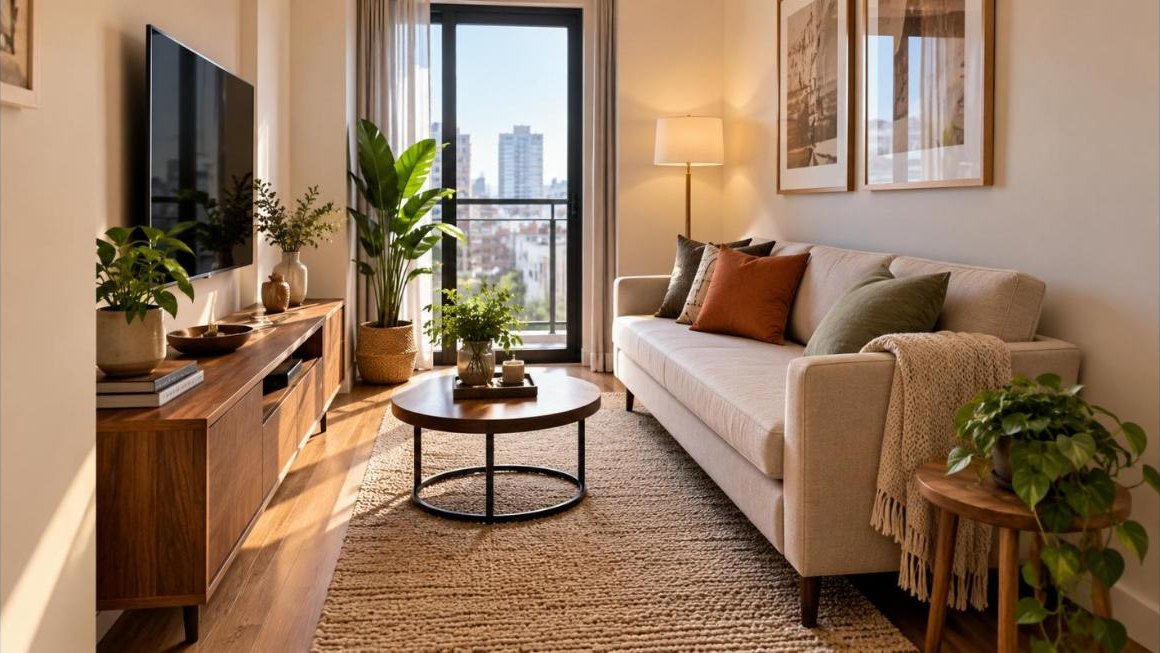
In a narrow room, every inch of sofa depth comes straight out of the walkway. A standard sofa at 38 inches deep against one wall of a 10 foot room leaves 82 inches, which sounds fine until a coffee table takes 20 and the walkway takes 30. Dropping to a 32 inch sofa gives you back half a foot, which is often the difference between a room that works and one that does not.
What counts as narrow depth
Most full-size sofas measure 36 to 42 inches overall depth. Narrow-depth models run 30 to 34 inches. Apartment or condo sofas sometimes go to 28 inches, which is very shallow and only suits upright sitting.
Overall depth is not the number that determines comfort. Seat depth is, and a narrow sofa can arrive at its slim overall figure in two quite different ways.
Two ways to make a sofa shallow
The good way is a thin back. The frame uses tight upholstery or a slim fixed back cushion, so overall depth drops while the seat stays a usable 21 to 22 inches. You lose the squashy pile of loose back cushions and gain a cleaner line.
The bad way is a shortened seat. The back stays thick and the seat is cut to 18 or 19 inches. Anyone taller than about 5 foot 6 will find their thighs unsupported and will perch rather than sit.
So the question to ask any seller is not how deep the sofa is. It is: what is the seat depth, measured from the front edge of the cushion to the face of the back?
Target numbers
- Overall depth: 30 to 34 inches for most tight rooms.
- Seat depth: 20 to 22 inches. Below 19 is uncomfortable for most adults.
- Seat height: 18 to 19 inches. A shallow seat feels better when it is slightly higher, because your knees drop.
- Back height: 32 to 36 inches. Shallow sofas need a taller back to compensate for the lack of depth.
- Back angle: a slight recline of about 5 degrees. Upright at 90 degrees feels like a waiting room; a steep recline needs depth you do not have.
Arm styles that save inches
Arms do not affect depth, but on a narrow sofa they affect usable width badly. A rolled arm can be eight inches wide on each side, taking sixteen inches of the footprint. A track arm is typically three to five inches. A flared or English roll arm sits in between.
In a tight room, a track arm or an armless modular piece gives you the most seat for the footprint. If you nap on the sofa, keep one rolled arm or add a bolster.
Styles that are naturally shallow
Mid-century designs are the obvious place to look: tapered legs, tight backs and slim profiles were the point of the style. Scandinavian and Japandi sofas follow the same logic. Tuxedo sofas, where the arms are the same height as the back, use a very slim section throughout. Settees and two-seat loveseats are almost always shallower than their full-size equivalents.
Avoid overstuffed, bench-cushion lounge sofas and anything described as deep-seated, obviously, but also check reclining sofas carefully: even when the closed depth looks modest, the mechanism needs rear clearance unless it is a wall-hugger design.
Making a shallow sofa comfortable
Add a long lumbar bolster. A 14 by 36 inch bolster against the back effectively deepens the support without changing the footprint, and it can be removed when you want to sit more upright. Choose a firm feather or foam insert, not a soft polyester one, which will just squash flat.
Keep the seat cushions firm. Soft cushions on a shallow seat let you sink forward and lose what little depth you have. Foam density of 2.0 pounds per cubic foot or a foam core with a fibre wrap works better here than down.
A footstool or small ottoman lets you extend when you want to, and pushes under a console when you do not.
The rest of the room
A narrow sofa pays off only if you keep the rest shallow too. Use a coffee table 16 to 18 inches deep rather than a square one, or use two small round tables that can be moved apart. Choose a console at 10 to 12 inches. Mount the television rather than using a unit. Hang shelves instead of standing a bookcase.
And remember the diagonal depth for delivery: a shallow sofa is usually easy to get through a door, which is a quiet additional benefit in exactly the kind of building where you need one.
Before you buy
Ask for seat depth, seat height, back angle and arm width in writing. Tape the footprint on the floor and sit on a dining chair placed at the right height and distance from the back. If your lower back is unsupported at that distance, the sofa needs a bolster, and you should budget for one at the time of purchase rather than discovering it later.

Written by gautam995576@gmail.com
Furniture buying editor focused on practical room planning, material checks, and clear decision guidance.
Related furniture guides
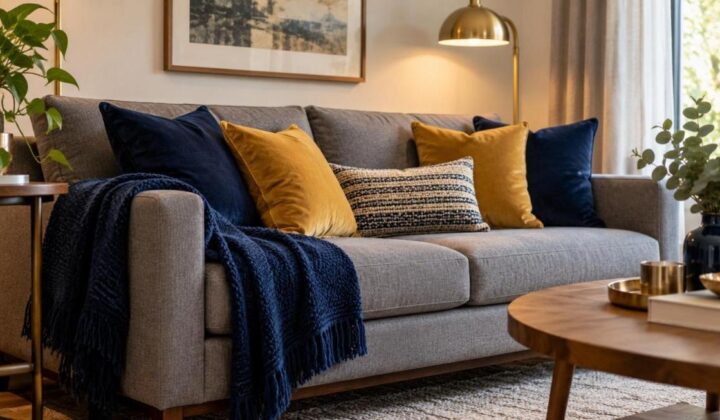
Styling a Grey Sofa: Colours That Lift the Room
Grey sofas go flat easily. Here is how to identify your grey undertone and build a palette around it with accent colours,…
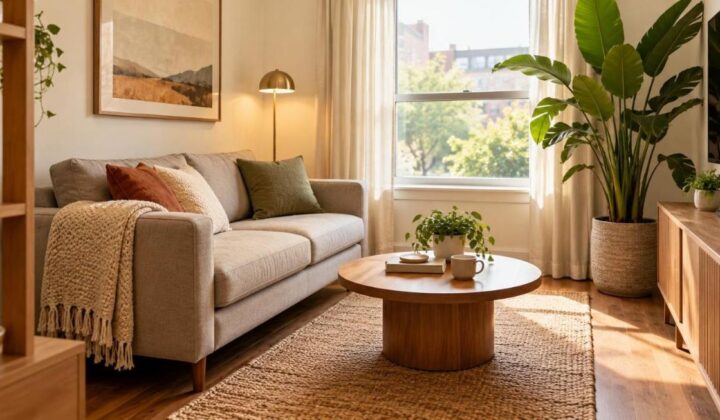
Small Living Room Furniture: Layouts That Actually Work
Five proven layouts for rooms under 150 square feet, the furniture proportions that make a small room feel bigger, and the pieces…
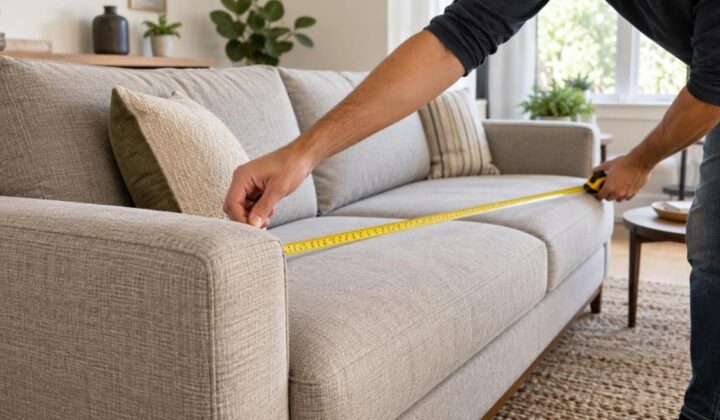
Sofa Dimensions Guide: Measuring Properly Before You Buy
Every measurement that matters: overall size, seat height and depth, arm height, diagonal depth for doorways, and the clearances a room needs…