Blue Sofas: The Safe Bold Choice
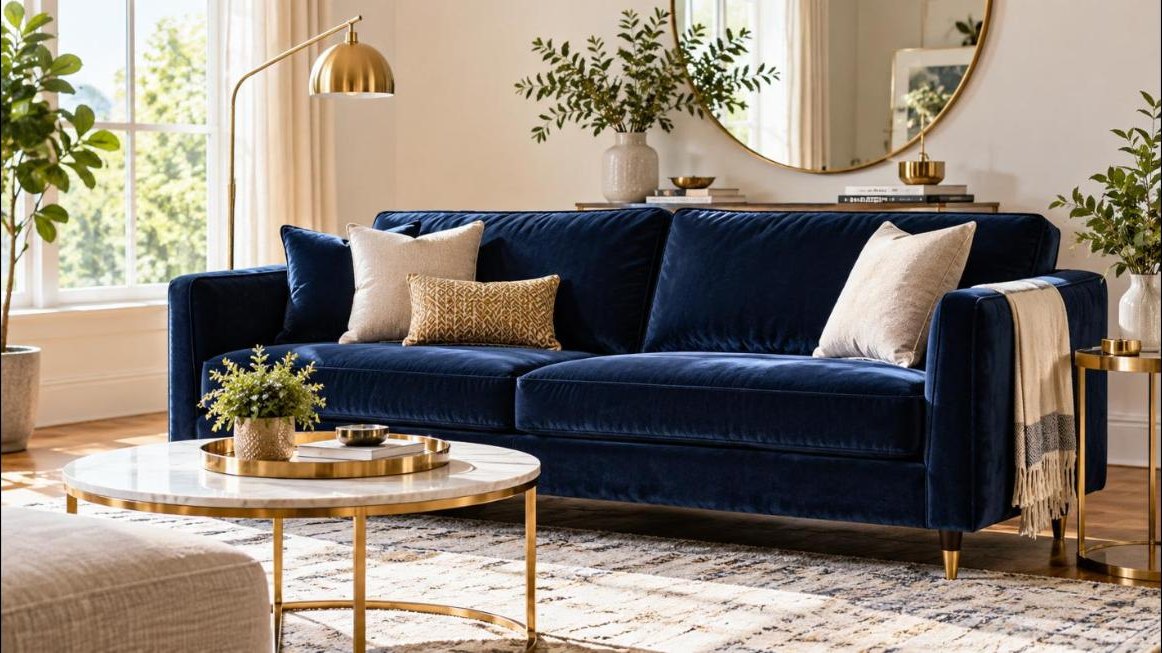
Blue is the colour people choose when they are tired of grey but not ready for yellow. It behaves like a neutral in practice, it suits almost every architectural style, and it is forgiving of wear. But navy and cobalt are not the same decision, and the shade you pick needs to match the light your room actually gets.
Matching the shade to the light
North-facing rooms get cool, even light that pushes blues towards grey and can make a cool blue look cold or lifeless. Choose a blue with a warm undertone: teal, petrol, or a navy with a hint of green. Avoid pale icy blues here.
South-facing rooms get warm, abundant light that lifts almost any blue. This is where you can use a true cobalt or a saturated royal blue without the room feeling heavy.
East-facing rooms are bright in the morning and dull later. Mid-tone blues such as denim or dusty blue hold up across both conditions.
West-facing rooms get warm evening light, which flatters navy and deep teal and can make lighter blues look washed out during the day.
Low-light rooms generally do better with a deep saturated blue than a pale one, because pale colours need light to read as colour and go muddy without it.
The main shades and what they do
Navy is the most practical. It reads almost as a neutral, hides marks well, and works with every wood tone. It can feel formal, so it needs texture and warmth around it. Pair with cream, camel, brass, rust and natural oak.
Teal and petrol sit between blue and green and bring more warmth than navy. They are flattering in low light and pair beautifully with mustard, terracotta, walnut and brass.
Dusty or denim blue is the easiest to live with and the most casual. It reads soft rather than bold and suits relaxed, coastal and country schemes. Pair with white, natural linen, jute, pale oak and soft greens.
Cobalt and royal blue are genuinely bold. They need a confident room with plenty of light and restraint elsewhere. Pair with white, black, chrome and a single warm accent such as ochre.
Powder blue is delicate and shows every mark. Beautiful in a bedroom sitting area; impractical as a main family sofa.
Palettes that work
- Navy plus cream plus brass. Timeless, slightly formal, very hard to get wrong.
- Navy plus rust plus oak. Warmer and more contemporary. The rust stops the navy feeling cold.
- Teal plus mustard plus walnut. Rich mid-century scheme; use the mustard sparingly.
- Dusty blue plus white plus jute. Light and coastal without being themed.
- Cobalt plus white plus black. Graphic and modern; keep patterns minimal.
- Blue plus green. Blue and olive or blue and sage is one of the most underused and most reliable combinations, and plants do half the work.
Wall colours
White walls let a blue sofa be the feature, which is the safest route. Warm off-white or cream softens navy and prevents the room feeling cold. A deep blue wall behind a blue sofa works only if the tones are clearly different; matching them exactly makes the sofa disappear. Pale blush or soft terracotta walls with a navy sofa is an unexpected combination that consistently photographs well and feels warm in person.
Avoid putting a cool blue sofa against a cool grey wall. The combination reads as institutional.
Fabric matters more with blue
Blue shows its texture more than most colours because the shade shifts with how the surface catches light. A navy velvet reads as rich and varies across the piece. A navy flat weave reads as solid and uniform. A navy linen reads as soft and slightly faded. Choose the fabric for the effect you want, not only for the colour.
Fade resistance is worth attention: blue dyes, particularly in cotton, are prone to fading in direct sunlight. Solution-dyed performance fabrics hold their colour far better, which matters in a bright room.
Practicality
Mid to dark blues are among the most forgiving sofa colours for daily life. They hide dust, hair and minor marks better than grey, far better than beige and infinitely better than white. Light blues do not share this advantage.
Pet hair is the exception. Light-coloured pet hair on a navy sofa is extremely visible. If you have a cream dog or cat, a mid-tone or patterned blue is a kinder choice than navy.
If you are nervous about committing
Start with a blue armchair or an ottoman and live with it for a season. If the shade still pleases you in winter light as well as summer, the sofa will too. And if you already own a blue sofa that feels flat, the usual fix is warmth: add brass, wood, a cream throw and a plant before you consider changing anything larger.

Written by gautam995576@gmail.com
Furniture buying editor focused on practical room planning, material checks, and clear decision guidance.
Related furniture guides
Sofa Clearance Sales: Timing, Real Discounts and Red Flags
When furniture actually goes on sale, how to tell a genuine clearance from an inflated list price, and the terms that make…
Recliner Sofas: Manual vs Power and What Actually Breaks
How reclining mechanisms work, the real failure points, why wall-hugger designs matter in small rooms, and what to check before buying a…
Living Room Furniture Sets: Buy Together or Build Separately?
Matching sets are cheaper and faster but can look flat and age as a unit. Here is when a set makes sense,…