Living Room Furniture Sets: Buy Together or Build Separately?
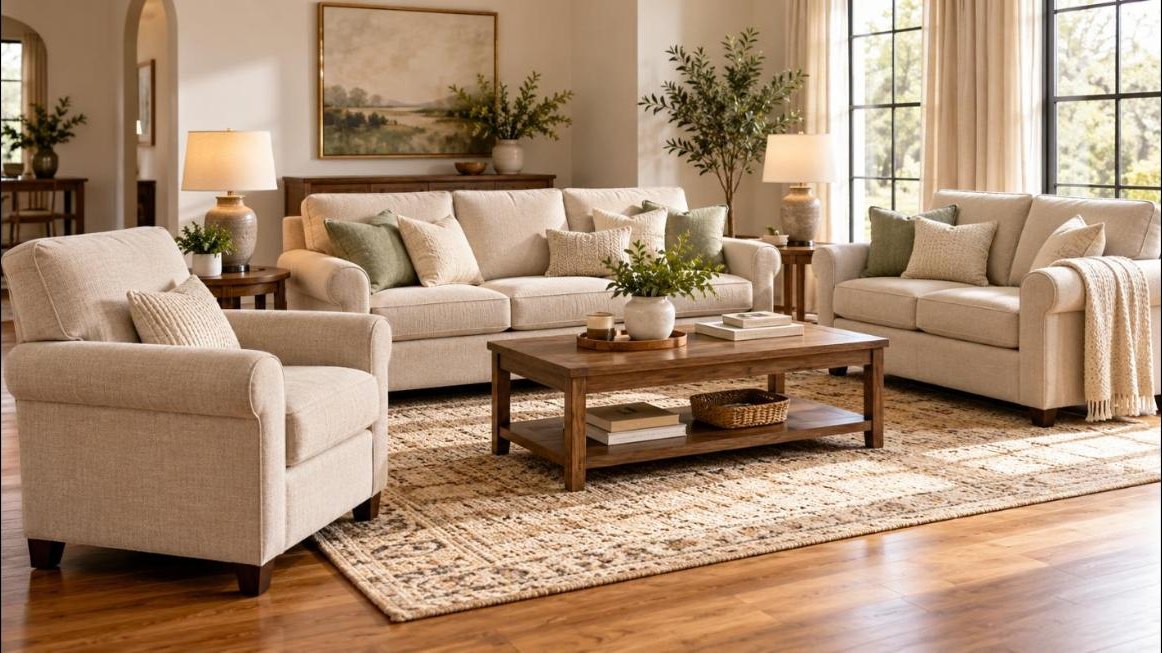
Furniture retailers sell sets because they are easy to merchandise and easy to buy. Designers avoid them because a matched set makes a room look like a showroom floor rather than a home. Both positions have a point, and which one applies depends on your budget, your timeline and how much you enjoy the shopping.
The honest case for a set
Price. A three-piece set is typically 15 to 30 percent cheaper than buying the same pieces individually, because the retailer saves on shipping and inventory.
Certainty. Colour, scale and fabric are guaranteed to work together. Matching a sofa to an armchair bought separately is genuinely difficult, and online colour reproduction makes it harder.
Speed. One decision, one delivery, one assembly day. If you have just moved and you need a functioning living room this week, this matters more than style theory.
Consistent wear. Everything fades and compresses at the same rate, so the room stays coherent rather than developing one obviously newer piece.
The honest case against
It looks bought. A matched sofa, loveseat and chair in identical fabric reads as a catalogue page. Rooms that feel designed almost always contain pieces from different sources.
It ages as a unit. The same consistency that keeps a set coherent means that when it looks dated, all of it looks dated at once, and replacing it is a single large expense.
Quality is averaged. Set pricing usually means the manufacturer spent the same per-piece budget on the sofa you use daily and the accent chair you sit in twice a month. You would rather that money were weighted.
Scale is fixed. Sets are designed for an average room. If yours is narrow, L-shaped or has an awkward fireplace, the pieces will not be the sizes you need.
A middle path: the partial set
Buy the sofa and loveseat as a pair, or the sofa and ottoman, and source the accent chair, tables and lighting separately. You keep the price advantage and the colour certainty on the large pieces, and you get the visual variety from the smaller ones, which are also cheaper to change later.
This is what most well-designed real rooms actually are: two or three related pieces plus several deliberately unrelated ones.
How to mix without it looking accidental
Mixing works when something connects the pieces. Pick at least two of these connectors and apply them consistently.
- A shared palette. Three colours maximum across the large pieces, repeated at least twice each in the room.
- A shared wood tone. Keep all exposed wood legs and table tops within one family: all warm oak and walnut, or all dark, or all painted black.
- A shared metal. Brass or black or chrome, picked once and used for lamps, handles and table frames.
- A shared line. All straight and angular, or all curved. Mixing a hard-edged sofa with a round-armed chair rarely works unless something else connects them.
- Consistent seat heights. Keep all seating within two inches of each other so conversation feels level.
The deliberate contrast then goes on texture and on one piece. A leather chair beside a linen sofa, or a single velvet ottoman in a room of woven fabrics, reads as intentional. Three unrelated contrasts read as a jumble.
Where to put the money
Spend the most per square inch on the sofa, because it takes the most use and is the hardest to replace. Spend next on lighting, which changes a room more than any other category for the money. Accent chairs, side tables and consoles can be inexpensive, secondhand or flat-pack without much penalty, because they take light use and are easy to swap.
This weighting is impossible within a set and is the strongest practical argument for buying separately if you have the time.
Buying a set well
If you do go with a set, check that the individual pieces are also sold separately, which usually indicates the manufacturer treats them as real products rather than filler. Confirm the frame and foam specifications for each piece, not just the sofa. Ask whether replacement covers exist. And break up the match yourself from day one with cushions, a throw and a rug from elsewhere, so the room never looks like it was delivered in one box.
A simple rule
If you need a complete room now and style is secondary, buy a set and break it up with accessories. If you can furnish over six to twelve months, buy the sofa first, live with it, and add pieces as you find them. The second route costs more in time and almost always produces a better room.

Written by gautam995576@gmail.com
Furniture buying editor focused on practical room planning, material checks, and clear decision guidance.
Related furniture guides
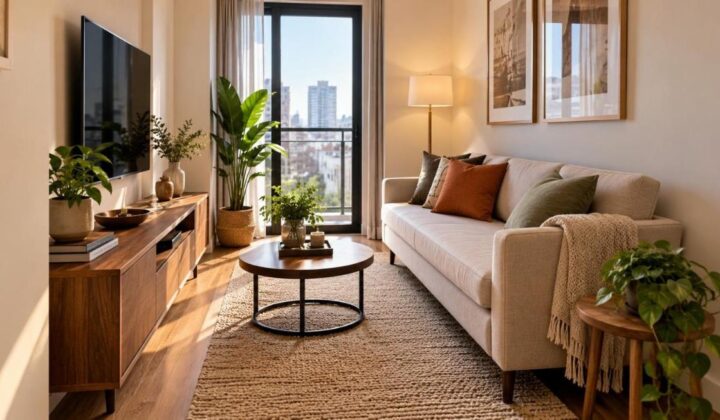
Narrow-Depth Sofas for Tight Spaces: What to Look For
Sofas under 33 inches deep solve apartment layouts, but only if the seat depth and back angle are right. Here is how…
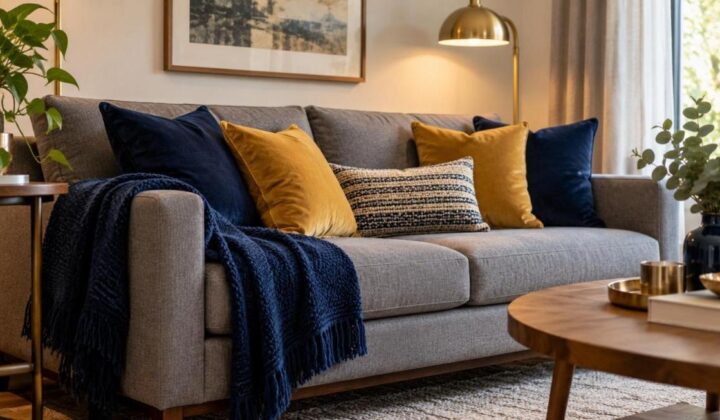
Styling a Grey Sofa: Colours That Lift the Room
Grey sofas go flat easily. Here is how to identify your grey undertone and build a palette around it with accent colours,…
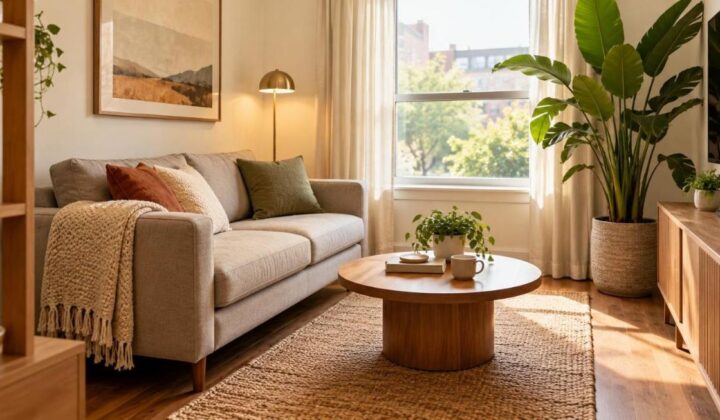
Small Living Room Furniture: Layouts That Actually Work
Five proven layouts for rooms under 150 square feet, the furniture proportions that make a small room feel bigger, and the pieces…