Sectional vs Regular Sofa: Which One Actually Suits Your Living Room
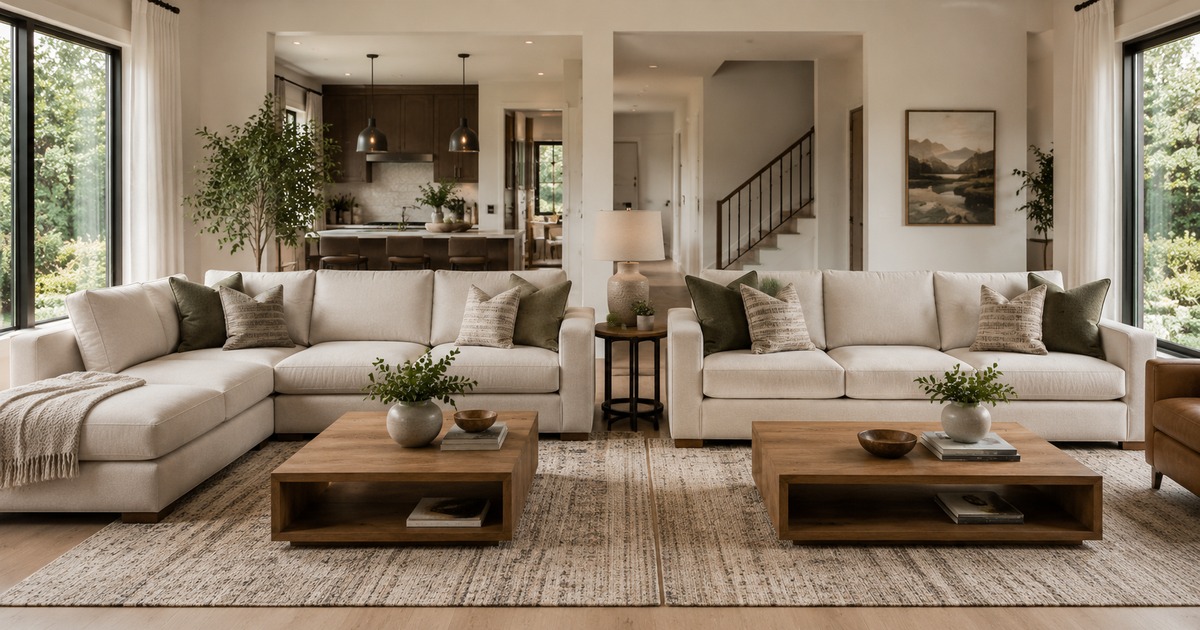
Sectionals have a reputation as the obvious choice for anyone who wants maximum seating and lounging comfort, while a regular sofa can feel like the safe, traditional pick. The truth is messier and more interesting: each shines in different rooms and for different lives, and the wrong choice can make a space feel cramped, awkward, or strangely empty. Rather than asking which is “better,” it helps to ask which fits your room’s shape, your household, and the way you use the space. Here is an honest comparison to help you decide.
What a regular sofa does best
A standard sofa, whether a two- or three-seater, is flexible in a way that is easy to underestimate. It sits neatly against a wall, pairs easily with armchairs or a loveseat, and is simple to rearrange when you fancy a change or move home. Because it has a smaller, more predictable footprint, it suits rooms with doors, windows, or walkways that a large sectional would block. It is also generally easier to move, deliver, and fit through tight doorways, the access problem that derails so many big-sofa purchases.
For smaller living rooms, a regular sofa plus one or two chairs often seats just as many people as a sectional while leaving the floor feeling open and the room easy to walk through. If you like to redecorate or you move often, the flexibility is a real, ongoing advantage.
Where a sectional wins
A sectional comes into its own when you have the space and you want serious lounging. It offers more continuous seating, a place to stretch right out, and a sense of an enclosed, cosy zone, ideal for film nights and big families. In an open-plan room, a sectional does something a regular sofa cannot: it defines space. Positioned well, an L-shape or U-shape draws an invisible line between the living area and the kitchen or dining zone, giving structure to a large, undivided room.
The catch is footprint. Sectionals are big, and in the wrong room they overwhelm, block light from windows, and leave little walking space. They are also harder to move and to fit through doors, so access planning matters even more than usual.
Let the room decide
The shape and size of your room should carry more weight than personal preference, because a sofa that fights its space never feels right however much you liked it in the shop.
- Small or busy rooms: a regular sofa keeps the floor open and the room flexible; add chairs for extra seats.
- Large rectangular rooms: either works, so let comfort and style decide.
- Open-plan spaces: a sectional helps zone the room, separating the lounge from the kitchen or dining area.
- Awkward layouts with doors and windows: a regular sofa is far easier to place around obstacles.
Whatever the room, plan the layout before you buy. Our guide to planning a room layout shows how to map traffic flow and test sizes on paper so the sofa fits the life of the room, not just the wall.
The modular middle ground
You do not have to choose between the two extremes. Modular sofas let you buy individual pieces and reconfigure them, behaving like a regular sofa today and a small sectional tomorrow, or rearranging entirely when you move. They cost more and you need to check the pieces lock together well, but for anyone whose space or household is likely to change, the flexibility can be worth it. This is one reason modular designs feature in our look at multi-functional furniture for flexible homes.
A quick way to choose
If your room is small, full of doorways and windows, or you like rearranging, lean regular. If you have a large or open-plan room and you prioritise lounging and zoning, lean sectional. And if your space or family is likely to change, a modular set hedges your bets. In every case, the deciding factor is the room and how you live in it, not which type looks more impressive in a catalogue. Measure your space and your access, picture the walkways, and the right answer usually becomes obvious.
Cost, delivery, and the practical stuff
Two practical points often tip the decision. First, sectionals usually cost more than a comparable regular sofa simply because there is more of them, though buying seats individually in a modular range can spread that cost. Second, and more importantly, a sectional is far harder to deliver and manoeuvre: its size and shape make tight doorways, stairwells, and lift access a real risk. A regular sofa, or a modular set that arrives in separate pieces, sidesteps a lot of that grief.
It is also worth thinking ahead. A regular sofa is easier to rehome, resell, or take with you when you move, while a large sectional may not fit your next place at all. If you move often or your circumstances change, that flexibility has real value, and it is easy to forget in the excitement of a showroom.
Comfort and everyday living
Comfort can pull either way, so think about how you relax. A sectional with a chaise or corner lets several people stretch out at once, which families and film-lovers adore, and it turns a corner of the room into a genuine lounging nest. A regular sofa keeps everyone in a tidier row, which some people actually prefer for conversation and for sitting upright. Neither is more comfortable in the abstract; it depends on whether you want a sprawl or a seat.
Cleaning and rearranging matter day to day as well. A regular sofa is easy to pull out and vacuum behind and quick to restyle, while a large sectional tends to stay put once it lands, gathering dust in the corner where it meets the wall. If you like to move things around or you are house-proud about the bits you cannot see, factor that in.
Frequently asked questions
Is a sectional better than a regular sofa?
Neither is universally better; it depends on your room and how you live. Sectionals offer more lounging space and help zone open-plan rooms, but they are bulky and harder to deliver and move. Regular sofas are more flexible, easier to place around doors and windows, and simpler to rehome. Match the type to your space rather than assuming bigger is better.
Do sectionals work in small living rooms?
They can, but with care. A compact sectional or a small modular set can fit a small room and even use a corner efficiently, but a large sectional will overwhelm a small space and block walkways and light. In most small rooms, a regular sofa plus a chair seats the same number of people while keeping the floor open and the room flexible.

Written by Ankita Roy
Furniture buying editor focused on practical room planning, material checks, and clear decision guidance.
Related furniture guides
Good Sofas Under $1000: What You Can Reasonably Expect
What a budget actually buys at this price, which corners get cut, the specifications that separate a three-year sofa from a ten-year…
Sleeper Sofas and Futons: An Honest Comfort Comparison
Pull-out sleeper, click-clack futon or a daybed? A frank look at how each one sleeps, how each one sits, what they cost…

Sectional Sofa Buying Guide: Sizes, Configurations and Real Costs
How to pick a sectional that actually fits your room: standard sizes, chaise vs corner configurations, what each price tier buys you,…