Coffee Table Ideas: Getting the Size, Shape, and Styling Right
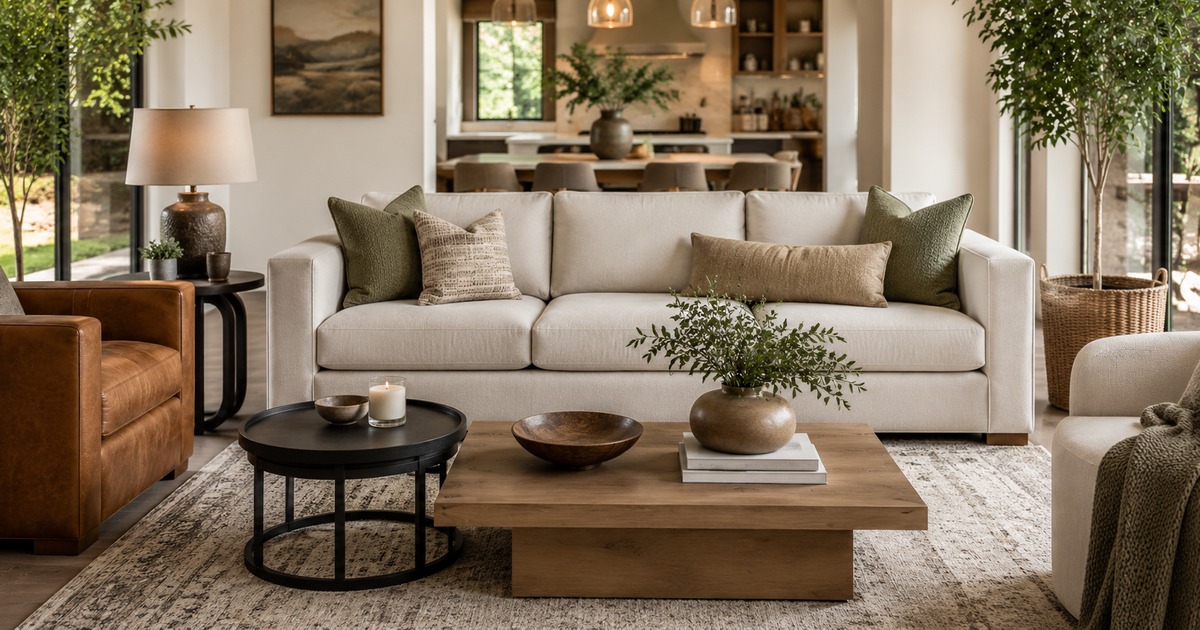
The coffee table is a small piece of furniture that does a surprising amount of work. It anchors the seating area, gives everyone somewhere to set a drink or a book, and, styled well, ties the whole living room together. Get it wrong, though, and it either floats awkwardly out of reach or crowds the space so you are forever shuffling around it. The good news is that a coffee table is one of the easiest pieces to get right once you know the few simple rules of proportion and a couple of styling tricks.
Getting the proportions right
Most coffee-table mistakes are about scale. As a general guide, a coffee table looks balanced when it is roughly two-thirds the length of the sofa it sits in front of, neither a tiny island lost in space nor a slab that dominates. Height matters just as much: aim for a table that sits level with or just below the seat cushions of your sofa, so it is easy to reach a cup without stooping or stretching.
Leave enough clearance to move comfortably. A gap of roughly a forearm’s length between the sofa and the table lets people get in and out and rest their feet, while still keeping the surface within easy reach. Too close and it blocks the legroom; too far and it stops being useful.
Shape and the flow of the room
The right shape depends on your seating and your traffic. Rectangular and oval tables suit long sofas and narrow rooms, echoing the seating and keeping pathways clear. Round and square tables work beautifully with sectionals, corner arrangements, or smaller spaces, and a round table with no sharp corners is the safer choice in a home with young children or in a tight walkway.
- Long sofa, narrow room: a rectangular or oval table follows the line of the seating.
- Sectional or square seating arrangement: a square or round table fills the space evenly.
- Small room or busy walkway: a round table softens the path and avoids painful corner knocks.
- Two facing sofas: a longer rectangular table, or even two small tables, bridges the gap.
Styling it without creating clutter
A beautifully styled coffee table follows a simple principle: a few considered objects, not a jumble. Designers often work in small groupings of varied height, something tall like a small vase or stack of books, something low and sculptural, and something with a bit of life such as a plant or a tray of candles. A tray is the secret weapon here, corralling the small bits into one tidy zone so the table reads as styled rather than messy.
Leave breathing room. The aim is an inviting surface that still has space to actually put a cup of coffee down, which is, after all, the table’s day job. Rotate a couple of seasonal touches and the same table feels fresh through the year without spending a thing.
Storage and double duty
In smaller homes a coffee table can earn its keep by doing more than holding mugs. Tables with a lower shelf, drawers, or a lift-up top hide remotes, coasters, and clutter, and a lift-top can even double as a casual laptop or dining-on-the-sofa surface. Nesting tables and a sturdy storage ottoman that works as a table, footrest, and extra seat are clever options when space is tight, which is why they appear in our guide to multi-functional furniture.
A few ideas by room type
In a compact apartment, a nesting set or a slim oval table keeps things light and movable. In a family room, a sturdy storage ottoman shrugs off feet, spills, and board games while hiding the toy avalanche. In a more formal living room, a single statement table in a quality material does the styling for you. Whatever the room, choose the table to suit the sofa and the space first, as covered in our guide to choosing a sofa, and the styling falls into place naturally.
Materials that suit your life
The material decides not just the look but the upkeep. A glass top feels light and airy and suits small rooms, but it shows every fingerprint and is a worry around very young children. Solid or engineered wood is warm and forgiving and hides marks well, while metal and stone lean modern and industrial but can be cold and heavy. If your coffee table will take feet, drinks, and the occasional craft session, choose a surface that wipes clean and does not scratch at a glance, our guide to wood and metal materials covers how each wears over time.
Think about edges and corners too, especially in a busy home. Rounded edges and sturdy, stable bases are far more child-friendly than sharp corners and tippy pedestals, and a table that does not budge when leaned on is safer and simply nicer to live with.
Finish matters as much as material. A matte or lightly textured surface hides dust, fingerprints, and small scratches far better than high-gloss, which looks stunning in photos but demands constant wiping in real life. If low effort is the goal, choose a forgiving finish in a mid-tone, and your table will look good with a fraction of the fuss. A coaster habit and a soft cloth kept nearby will do more for the table’s lifespan than any single material choice, whatever surface you land on. Small, low-effort care habits like these quietly keep furniture looking new for years, and they cost nothing at all.
Frequently asked questions
How big should a coffee table be?
A good guide is about two-thirds the length of your sofa, with a height level with or just below the seat cushions. Leave roughly a forearm’s length of clearance between the sofa and the table so people can move and reach comfortably. Scale it to the seating rather than the whole room.
What shape coffee table is best?
It depends on your seating and space. Rectangular or oval tables suit long sofas and narrow rooms; round or square tables suit sectionals, corner setups, and smaller rooms. Round tables are the safest choice in tight walkways or homes with young children because they have no sharp corners.
How do I style a coffee table without it looking cluttered?
Use a few objects of varied height grouped together, and corral the small items on a tray so they read as one tidy arrangement. Leave open space so the table is still usable for drinks. A single plant or a stack of books plus one sculptural object is usually enough; resist the urge to fill every inch.

Written by Adarsh Sharma
Furniture buying editor focused on practical room planning, material checks, and clear decision guidance.
Related furniture guides

Good Sofas Under $1000: What You Can Reasonably Expect
What a budget actually buys at this price, which corners get cut, the specifications that separate a three-year sofa from a ten-year…

Sleeper Sofas and Futons: An Honest Comfort Comparison
Pull-out sleeper, click-clack futon or a daybed? A frank look at how each one sleeps, how each one sits, what they cost…

Sectional Sofa Buying Guide: Sizes, Configurations and Real Costs
How to pick a sectional that actually fits your room: standard sizes, chaise vs corner configurations, what each price tier buys you,…