Choosing a Dining Table: Size, Shape, and How People Really Eat
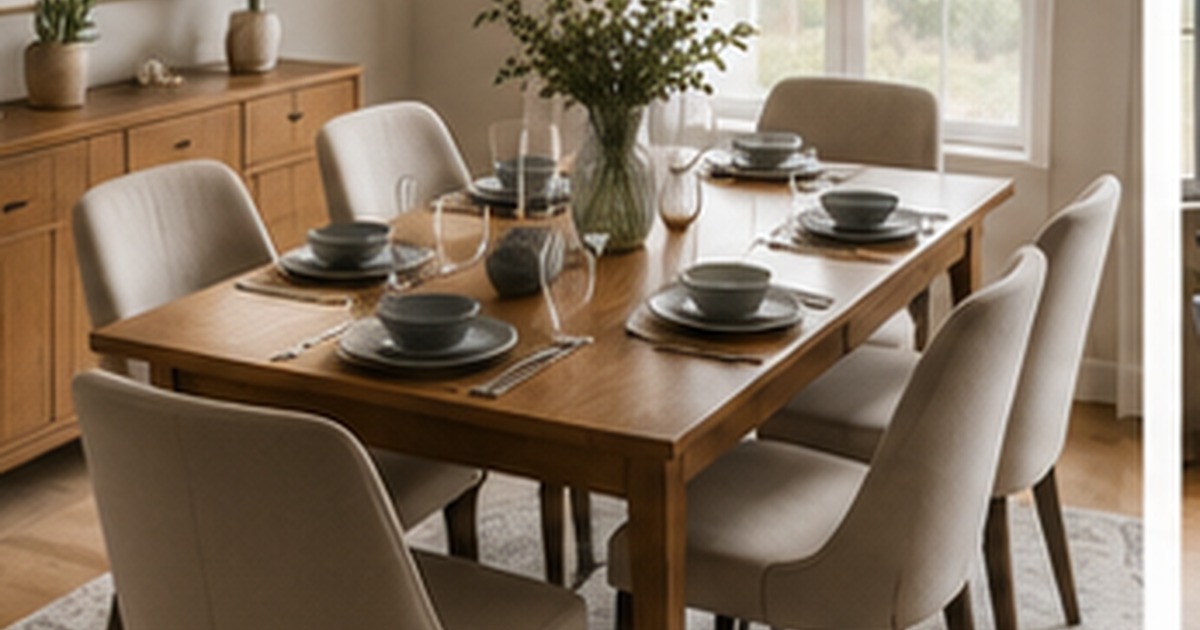
A dining table is one of the most-used and longest-lived pieces of furniture in a home, the place where meals, homework, work, and conversation all happen, so it pays to choose it well. The two things people most often get wrong are size and shape: a table that is too big crowds the room and blocks the path around it, while one too small leaves no room for plates, let alone guests. Getting it right is mostly about matching the table to your space and to how you actually eat. Here is how to choose a dining table you will be glad of for years. Once you have chosen it, our guide to creating a dining space you actually want to use helps you set the whole area up well.
Start with how many you seat, and how often
Begin with the honest numbers: how many people eat at the table day to day, and how many you want to seat when guests come. These are usually different, and trying to size for the maximum every day is how dining rooms end up dominated by a table that is too big most of the time. A table that comfortably seats your everyday number, with a plan to expand for occasional guests, is almost always the better choice than a permanently oversized one.
Size it to the room, not just the people
A table must fit the people and the room. Each diner needs enough width to eat comfortably without elbowing their neighbour, and the table needs enough clearance all around for chairs to pull out and for people to walk behind seated diners. As a rule of thumb, leave a generous arm’s length, around a metre, between the table edge and the nearest wall or furniture, so chairs can move and people can pass. Mark the table’s footprint, plus pulled-out chairs, on the floor before buying; this is the single best way to avoid the too-big mistake, and it mirrors the approach in our guide to planning a room layout.
Shape changes everything
The shape affects how many it seats, how it fits the room, and even the mood of a meal.
- Rectangular: the most common, seats the most people, and suits long or narrow rooms, though the ends can feel a little distant.
- Round: sociable, with everyone able to see and talk to each other, and no sharp corners, great for smaller rooms and families, but big rounds eat floor space.
- Square: intimate for four and tidy in a square room, but awkward to seat larger numbers.
- Oval: the sociability of round with more capacity, and softer in a narrow room than a rectangle.
Fixed or extendable?
For most homes, especially smaller ones, an extendable table is the smart compromise: compact for everyday meals and larger when guests arrive, so you are not living daily with a table sized for your busiest dinner party. The trade-offs are a slightly more complex mechanism and the need to store the extra leaf, but the flexibility is worth it for anyone whose numbers vary. A fixed table is simpler and sturdier and makes sense if your seating needs are constant. This flexibility is exactly why extendable tables feature in our look at multi-functional furniture.
Material and everyday life
Because a dining table takes daily wear, spills, heat, homework, the material matters for both looks and upkeep. Solid wood is warm, durable, and repairable but needs occasional care and can mark; engineered wood with a tough laminate resists scratches and wipes clean easily, ideal for busy family life; glass looks light and airy but shows every fingerprint and is a worry with young children; metal and stone are hard-wearing but heavy and can feel cold. Match the surface to your household, our guide to wood and metal materials covers how each wears over time. A forgiving surface you do not have to fuss over usually beats a beautiful one you are forever protecting.
Caring for your table so it lasts
A dining table is a long-term investment, and a little care keeps it looking good for decades rather than years. The everyday basics make the biggest difference: wipe spills promptly so they do not stain or swell the surface, use mats or trivets to protect against heat and scratches, and avoid dragging plates and pans across the top. For solid wood, the occasional treatment with the right oil or wax feeds the timber and refreshes the finish, and minor scratches can often be sanded or buffed out, one of the quiet advantages of solid wood over laminate, which cannot be repaired the same way.
Sunlight and heat are the silent enemies. A table left in strong, direct sun can fade or, with solid wood, dry out and crack over time, so positioning it out of harsh sun, or using a cloth in the brightest hours, protects it. None of this is demanding; a few sensible habits are what separate a table that becomes a family heirloom from one that looks tired within a few years.
Frequently asked questions
What size dining table do I need?
Size it to seat your everyday number comfortably, with each diner having enough elbow room, then plan to expand for guests rather than buying for the maximum daily. Leave roughly a metre of clearance around the table so chairs can pull out and people can pass. Mark the table and pulled-out chairs on the floor before buying to be sure it fits the room.
Is a round or rectangular dining table better?
It depends on your room and household. Rectangular tables seat the most and suit long or narrow rooms; round tables are more sociable, have no sharp corners, and suit smaller rooms and families, but large ones use a lot of floor space. Square tables suit four in a square room, and oval offers round-style sociability with more capacity. Match the shape to your space and how you like to eat.
Are extendable dining tables worth it?
For most homes, yes, especially smaller ones, because they stay compact for everyday meals and expand for guests, so you are not living daily with an oversized table. The mechanism is slightly more complex and you must store the leaf, but the flexibility is well worth it if your numbers vary. A fixed table makes sense only if your seating needs stay constant.
What dining table material is easiest to maintain?
Engineered wood with a tough laminate or a quality sealed surface is the easiest for busy family life, since it resists scratches and wipes clean without special care. Solid wood is durable and repairable but needs occasional treatment and can mark; glass shows every fingerprint. For a low-fuss table that shrugs off daily meals and homework, a forgiving, wipe-clean surface is usually the practical choice.

Written by Adarsh Sharma
Furniture buying editor focused on practical room planning, material checks, and clear decision guidance.
Related furniture guides
How to Create a Dining Space You Actually Want to Use
Whether it's a full dining room or a kitchen corner, how to set up a comfortable, inviting dining space with the right…