Traditional Sofa Styles Explained: Chesterfield to Camelback
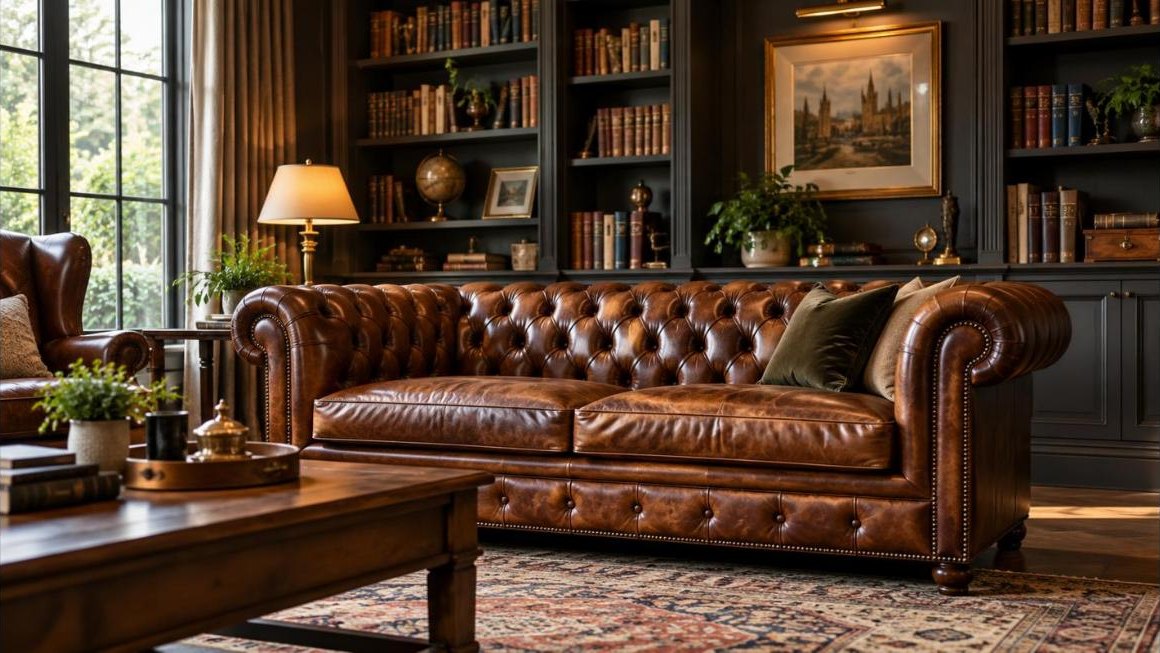
Traditional sofa styles are told apart by three things: the arm shape, the back shape and whether the upholstery is buttoned. A Chesterfield has rolled arms level with a deep-buttoned back; a Lawson has a lower arm than back and loose cushions; a camelback has a single humped back and exposed legs; an English roll arm has low, tightly rolled arms set back from the front; a tuxedo has straight arms the same height as a straight back. Once you can name the shape, you can search for it and compare like with like.
Traditional sofa styles at a glance
| Style | Arms | Back | Seat feel | Suits |
|---|---|---|---|---|
| Chesterfield | Rolled, same height as back | Deep-buttoned, low | Firm, upright | Studies, formal rooms; leather or velvet |
| Lawson | Lower than back, rolled or square | Loose back cushions | Soft, loungeable | Family rooms; the most common everyday shape |
| English roll arm | Low, tightly rolled, set back | Tight back, slight pitch | Deep and soft | Relaxed traditional rooms; linen and loose covers |
| Camelback | Scrolled, high | Single or double hump, tight | Upright, shallow | Formal sitting rooms; shows off fabric |
| Tuxedo | Straight, same height as back | Straight, often tufted | Upright | Smart, symmetrical rooms |
| Bridgewater | Low, softly rolled, set back | Loose cushions, slightly higher than arms | Casual | Cottage and country rooms |
| Knole | High, hinged sides tied with cords | High and straight | Upright, enclosed | Period houses; statement piece |
Typical dimensions are similar across styles, 200 to 230 cm wide for a three-seater, but seat depth is not: a Chesterfield or camelback sits at 50 to 55 cm, an English roll arm at 60 cm or more. Check depth against how you sit using the sofa measuring guide; for the leather most Chesterfields come in, see leather grades and care.
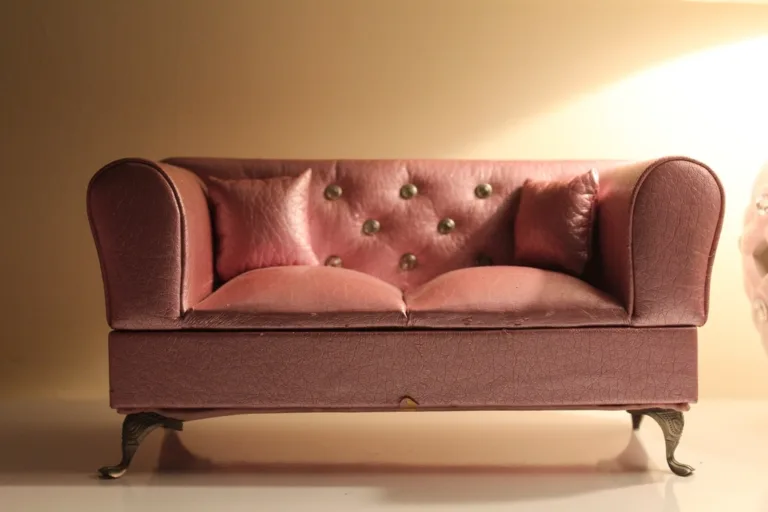
Chesterfield
Deep button tufting across the back, rolled arms at exactly the same height as the back, and a low seat. Traditionally leather, usually with nailhead trim along the base. The silhouette is symmetrical and solid, which is why it reads as formal.
What separates a real one from an imitation is the tufting. Genuine deep buttoning pulls the material into diamond folds that are sewn, not glued or stapled, and the folds run in a consistent direction. Shallow printed or glued buttons on a flat back are the giveaway.
Chesterfields suit libraries, studies and rooms with period detail. They are less comfortable than they look, because the seat is low and the arms are too high for comfortable lounging.
Camelback
An eighteenth-century English shape with a serpentine back that rises to one or two humps in the centre and curves down to the arms. Exposed wooden legs, often with a slight cabriole curve.
It is a formal, elegant silhouette that works in traditional rooms and in otherwise modern rooms as a deliberate contrast. The back is usually too curved for comfortable reclining, so it suits a sitting room rather than a television room.
English roll arm
Low, softly rolled arms set back from the front of the seat, a loose and comfortable look, often with a skirt. Deep seats and down-wrapped cushions are typical.
This is the most comfortable of the traditional shapes and the one that suits family use best. The set-back arms give more usable seat width than the dimensions suggest. Look for a seat depth around 23 to 25 inches and cushions with a foam core rather than pure down, which looks beautiful and needs daily plumping.
Lawson
A simple shape with arms lower than the back and loose back cushions, developed in the early twentieth century specifically for comfort rather than formality. It is the ancestor of most mainstream sofas sold today.
Versatile, easy to live with, and the safest traditional shape in a mixed room. The loose cushions can be flipped and rotated, which extends the life considerably.
Tuxedo
Arms and back at the same height, straight lines, usually a tight back or a single bench cushion. Art Deco in origin and strongly geometric.
The level arm-and-back line makes it look slim, so it works well in small formal rooms. It is not a lounging sofa. Check the back height, because a tuxedo with a low back gives no head support at all.
Bridgewater
Low rolled arms set back, a slightly rounded back, a skirt to the floor and an unassuming overall look. It is the quiet one of the family, designed to disappear into a room rather than dominate it.
Comfortable, casual and a good choice when you want a traditional feel without the sofa becoming the focal point.
Cabriole
Exposed wood frame with the back and arms at the same height, forming a continuous curved line. French in origin and very decorative.
Beautiful and distinctly formal. The exposed frame makes it visually light, so it suits small rooms, but the seats are usually shallow and firm.
Settee and loveseat
A settee is a small sofa, generally more upright and more decorative, often with an exposed frame. A loveseat is simply a two-seat sofa in the same style as its three-seat sibling. Both are useful in small rooms and as a second seating piece.
How to judge a traditional sofa
- Frame: kiln-dried hardwood with corner blocks. Traditional shapes put more stress on the frame than boxy modern ones.
- Suspension: eight-way hand-tied is the traditional standard and is still used on good reproductions.
- Tufting and buttons: sewn through, evenly spaced, consistent fold direction.
- Nailhead trim: individually applied heads, not a strip with fake heads moulded on.
- Skirt: should be lined and hang straight without rippling.
- Pattern matching: on patterned fabric, the pattern should align across cushions and up the back.
- Legs: solid wood, integral to the frame or bolted into hardwood, not screwed into a plastic insert.
Mixing traditional shapes into a modern room
One traditional piece in an otherwise contemporary room almost always works, because the contrast reads as deliberate. Two or three, mixed with modern pieces, starts to look unresolved. Keep the fabric current even if the shape is not: a camelback in a plain modern weave or a Chesterfield in a performance velvet sits comfortably in a present-day room in a way that the same shape in a traditional floral does not.
When this does not apply
Retailers use these names loosely; a “Chesterfield-style” sofa may only share the buttons. Judge by the arm and back shape in the photos and by the listed seat depth, not the name.

Written by gautam995576@gmail.com
Furniture buying editor focused on practical room planning, material checks, and clear decision guidance.
Related furniture guides
How to Choose a Sofa for Your Space and the Way You Live
Choose a sofa by three numbers: two-thirds of the wall, a 90 cm walkway, and seat depth that suits how you sit.…

Matching Your Sofa to the Room: A Simple System
A five-step method for choosing a sofa that fits the architecture, light, palette and use of your room, instead of one that…
Rug Buying Guide: Sizes, Materials and Placement
The rug sizes that suit each room, how wool, polypropylene, jute and viscose really perform, and the placement rules that stop a…