Do You Really Need a Box Spring? Bed Bases and Support Explained

Few bedroom questions cause as much confusion as the humble bed base. Do you need a box spring? Will slats do? Is a platform bed enough on its own? The answer matters more than it seems, because the wrong base can leave a new mattress sagging, void its warranty, or simply feel uncomfortable. The good news is that once you understand what a base is actually for, the choice becomes straightforward. Here is what each type does and how to match it to your mattress.
What a bed base is actually for
A bed base does three things: it supports the mattress evenly so it does not sag or wear unevenly, it raises the bed to a comfortable height, and, depending on the type, it can add a little give or improve airflow. The key word is even support. A mattress is only as good as what is under it; put a quality mattress on a poor or unsuitable base and it will fail early, which is the single most common reason people blame a mattress that was never the problem.
The main types of base
Box spring
A traditional box spring is a wooden frame containing springs or a grid, designed to absorb shock and add a little flex under the mattress. It pairs classically with innerspring mattresses and raises the bed height. Modern foam and hybrid mattresses, however, often do not need or want the give of a box spring and can perform better on a firmer base, so a box spring is no longer the default it once was.
Slatted base
Wooden or metal slats across the frame are the most common base today. They support the mattress, allow excellent airflow underneath, and, if closely spaced and sturdy, suit almost any mattress. The thing to check is the gap between slats: too wide and the mattress sags between them and the warranty may be voided.
Platform / solid base
A platform bed has a solid or near-solid surface under the mattress, giving firm, even support with no need for anything extra. It suits foam and hybrid mattresses particularly well. The only minor drawback is reduced airflow compared with slats, which a few ventilation gaps usually solve.
Foundation
A foundation is a sturdy, non-springy box that does the supporting job of a box spring without the bounce, designed for modern mattresses. It provides the height and firm, even support that foam and hybrid mattresses prefer.
What your mattress actually needs
The base you need is dictated by your mattress, so start there. Innerspring mattresses traditionally suit a box spring or sturdy slats; foam and hybrid mattresses generally prefer a firm, even surface like a platform, foundation, or closely spaced slats, and can feel too soft or wear badly on a springy box spring. Always check the manufacturer’s recommendation, because they design the mattress with a particular kind of support in mind. Adjustable and smart beds add a further consideration, since their bases need a mattress flexible enough to bend with them.
Protecting your warranty
This is the part people learn the hard way. Many mattress warranties specify the type of support required, often a maximum slat gap or a particular base type, and using the wrong base can void the warranty entirely. Before you buy or reuse a base, read the mattress warranty terms, check the slat spacing against them, and add extra slats or a solid board if the gaps are too wide. A few minutes of checking can save the cost of a whole mattress.
Matching the base to your bed
In practice, most modern beds come with a slatted base built into the frame, which works for the majority of mattresses as long as the slats are sturdy and closely spaced. If you have a foam or hybrid mattress, lean toward a platform, foundation, or close slats; if you have a traditional innerspring and like a softer feel, a box spring still has its place. And if you are choosing a new frame anyway, our guide to what makes a bed frame last covers how the frame and base work together.
Bed height and getting in and out
The base does not just support the mattress; it sets how high the bed sits, which affects comfort more than people expect. A bed that is too low is hard to rise from, especially for older sleepers or anyone with knee or back issues, while one that is too high can feel like climbing in. As a rough guide, sitting on the edge with your feet flat on the floor and your knees at roughly a right angle is the comfortable zone, and the base plus mattress thickness together determine that height.
This is easy to overlook when buying components separately. A thick mattress on a tall foundation can end up surprisingly high, and a thin mattress on a low platform surprisingly low. If you are short on space, a lower-profile setup can also make a room feel more open, in the same way the low-furniture trick works in our guide to making a small bedroom feel bigger. Add the mattress and base heights together before you buy, and picture sitting on the edge, rather than discovering the result on delivery day.
Frequently asked questions
Do I need a box spring with a memory foam mattress?
Usually no. Foam and hybrid mattresses generally prefer a firm, even surface like a platform, foundation, or closely spaced slats, and can feel too soft or wear unevenly on a springy box spring. A box spring is best suited to traditional innerspring mattresses. Always check your mattress maker’s recommendation, as it is designed for a specific kind of support.
Can I put a mattress directly on the floor?
You can short term, but it is not ideal long term. Without airflow underneath, moisture can build up and encourage mould, and the mattress may wear unevenly and feel colder. If you must, lift it regularly to air and consider a simple slatted base as soon as possible, which provides support and ventilation for very little money.
How do I know if my base is right for my mattress?
Check your mattress manufacturer’s recommendation and warranty terms, which usually specify the kind of support and any maximum slat gap. As a rule, the mattress should feel evenly supported with no sagging between slats, and the base should be firm and stable. If your base does not match the requirements, you risk discomfort and a voided warranty.
Why does my new mattress sag if it is the base?
Because the base supports the mattress, an unsuitable one, such as widely spaced slats or a worn box spring, lets the mattress dip and wear unevenly, mimicking a faulty mattress. Before blaming the mattress, check the base is firm, even, and matched to the mattress type. Replacing or upgrading the base often solves a sag people wrongly attribute to the mattress itself.

Written by Ankita Roy
Furniture buying editor focused on practical room planning, material checks, and clear decision guidance.
Related furniture guides
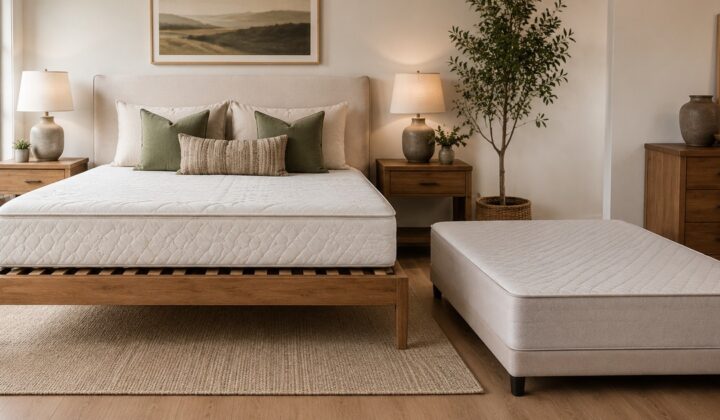
Bed Frames Explained: Materials, Support, and What Actually Lasts
What separates a bed frame that lasts from one that creaks in a year: a plain-English look at materials, support, sizing, and…
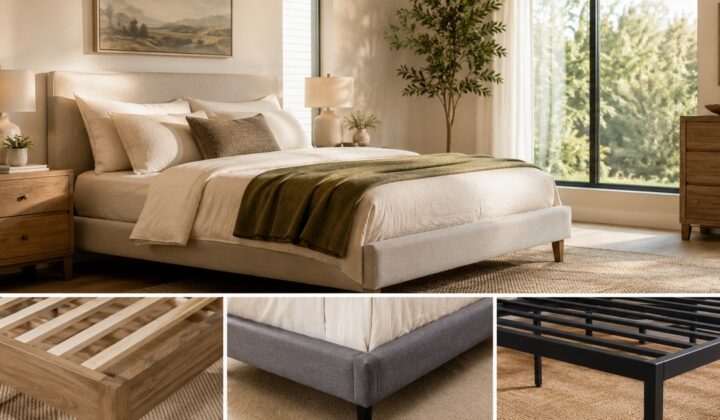
Storage Beds vs Standard Beds: An Honest, Real-World Comparison
Storage beds free up space but aren't for everyone. A real-world comparison of storage and standard beds to help you decide which…
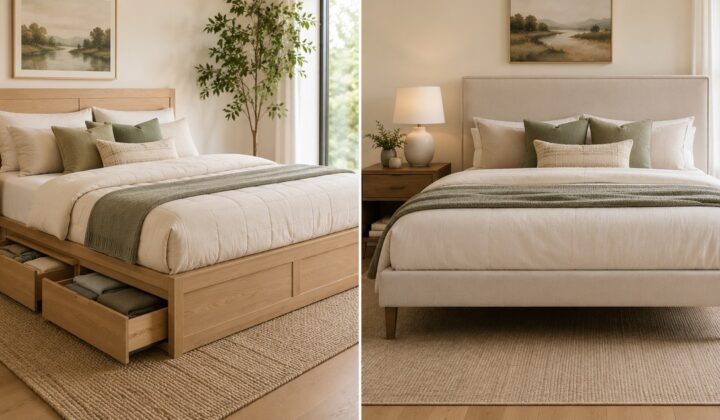
How to Plan Bedroom Storage That Actually Works
Stop fighting your closet. How to plan wardrobes and bedroom storage around what you really own, from layout and doors to making…