How to Make a Small Bedroom Feel Bigger
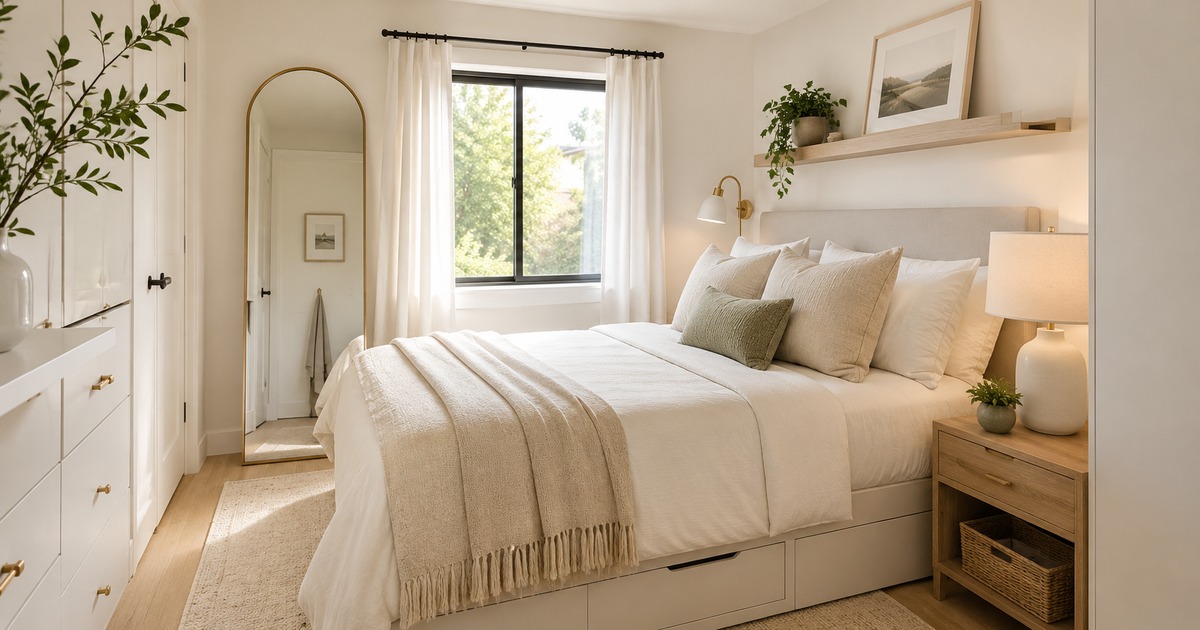
A small bedroom does not have to feel cramped. Some of the calmest, most restful bedrooms are tiny ones that have been handled cleverly, and most of the tricks cost little or nothing and work even if you rent and cannot change a thing structurally. The goal is not to magically add square footage but to reduce the things that make a room feel small, clutter, visual heaviness, blocked light, and poor layout, so the space you have feels open and peaceful. Here is how to do exactly that.
Choose furniture that does not crowd the room
In a small bedroom, the furniture you leave out matters as much as what you put in. The bed will dominate, so everything else should be lean. Choose pieces that are appropriately scaled, a slim bedside instead of a bulky cabinet, a low-profile bed frame that does not loom, and furniture with legs rather than solid bases, because seeing the floor continue underneath makes a room feel larger. Every piece should earn its place; if it is not used or needed, it is just taking up precious space.
Use the walls and the height
When floor space is scarce, go up. Walls and vertical space are the small room’s greatest untapped resource. Wall-mounted shelves, floating bedside surfaces, and tall, narrow storage draw the eye upward and keep the floor clear, which is what actually makes a room read as spacious. Hanging curtains high and wide, above the window and beyond its edges, makes the ceiling feel higher and the window larger. Mounting lights on the wall instead of standing them on surfaces frees up the little surface space you have.
Light, colour, and mirrors
Light and colour change how big a room feels more than almost anything else.
- Keep walls light and tonal; pale, soft colours reflect light and recede, making walls feel further away.
- Maximise natural light, keep the window clear and use light, airy curtains rather than heavy drapes.
- Add a mirror opposite or near the window to bounce light around and create a sense of depth.
- Use a few layers of soft lighting rather than one harsh overhead bulb, which flattens and shrinks a room.
None of these requires permission from a landlord, which makes them perfect for renters who want a bigger-feeling room without touching the walls.
Cut the visual clutter
Clutter is what makes a small room feel small, more than its actual size. Every visible item adds visual weight, so the single most powerful change is having less out on display. Good storage is the enabler here: when everything has a home out of sight, the surfaces stay clear and the room instantly feels calmer and larger. A storage bed and the approaches in our guide to planning bedroom storage do most of the heavy lifting, turning a cluttered box room into a serene one.
Layout tricks that open up the floor
How you arrange the room shapes how big it feels. Keep the centre of the floor as clear as possible, since visible, unbroken floor reads as space, and avoid blocking the natural path from the door to the window. Pushing the bed against a wall or into a corner frees the most floor, and keeping furniture low around it preserves the open sight lines that make a room breathe. These same principles scale up to a whole home, as our guide to furnishing a small apartment shows.
Small touches that pull it together
Once the big moves are in place, a few small touches make a small bedroom feel intentional rather than simply minimal. Keeping bedding and larger pieces in similar, calm tones reduces the visual breaks that make a room feel busy and chopped up, so the eye moves smoothly across the space. A single larger piece of art works better than several small ones, which can make walls feel cluttered. And leaving some wall and surface deliberately empty gives the room room to breathe, which reads as space.
Scale your decor to the room, too. Oversized lamps, chunky frames, and bulky throws overwhelm a small space, while slimmer, lighter versions of the same things feel right and keep sight lines open. The trick throughout is restraint: a small bedroom almost always looks bigger with less in it, so when in doubt, remove something rather than adding. A calm, uncluttered small room feels more spacious than a larger one crammed with stuff.
Frequently asked questions
What colours make a small bedroom look bigger?
Light, soft, tonal colours work best, pale neutrals, soft whites, and gentle muted shades, because they reflect light and make walls feel further away. Keeping walls, and ideally larger furniture, in a similar light tone reduces visual breaks and makes the room feel more open. Dark, bold colours can look striking but tend to make a small room feel more enclosed.
How should I arrange furniture in a small bedroom?
Keep the floor as clear as possible: push the bed against a wall or into a corner, choose slim, low furniture, and avoid blocking the path between the door and the window. Use vertical and wall-mounted storage to keep surfaces and floor clear. The more unbroken floor and clear sight lines you can preserve, the larger the room feels.
How can I make a small bedroom feel bigger if I rent?
Focus on the changes that need no permission: declutter and add hidden storage, use light colours through bedding and removable decor, add a mirror near the window, layer soft lighting, and choose slim, leggy furniture that shows the floor. Hanging curtains high and wide also makes the room feel taller. None of these touch the structure, so they are ideal for renters.
Does a mirror really make a small bedroom look bigger?
Yes, used well. A mirror placed opposite or near a window reflects natural light around the room and creates a sense of depth, both of which make a space feel larger and brighter. A large mirror or a mirrored wardrobe door has the strongest effect. Avoid simply hanging mirrors randomly; position them to bounce light and extend a view for the best result.
What is the single best change for a cramped bedroom?
Decluttering and adding hidden storage, because visible clutter is what makes a small room feel small more than its actual size. When surfaces and floor are clear and everything has a home out of sight, even a tiny room instantly feels calmer and more spacious. It is also free, which makes it the best place to start before changing anything else, well before you spend on furniture or paint.

Written by Ankita Roy
Furniture buying editor focused on practical room planning, material checks, and clear decision guidance.
Related furniture guides
Bed Frames Explained: Materials, Support, and What Actually Lasts
What separates a bed frame that lasts from one that creaks in a year: a plain-English look at materials, support, sizing, and…
Storage Beds vs Standard Beds: An Honest, Real-World Comparison
Storage beds free up space but aren't for everyone. A real-world comparison of storage and standard beds to help you decide which…
Do You Really Need a Box Spring? Bed Bases and Support Explained
Box spring, slats, platform, or foundation? What each bed base actually does, what your mattress needs, and how to avoid wrecking your…