White and Light Sofas With Kids and Pets: A Survival Guide
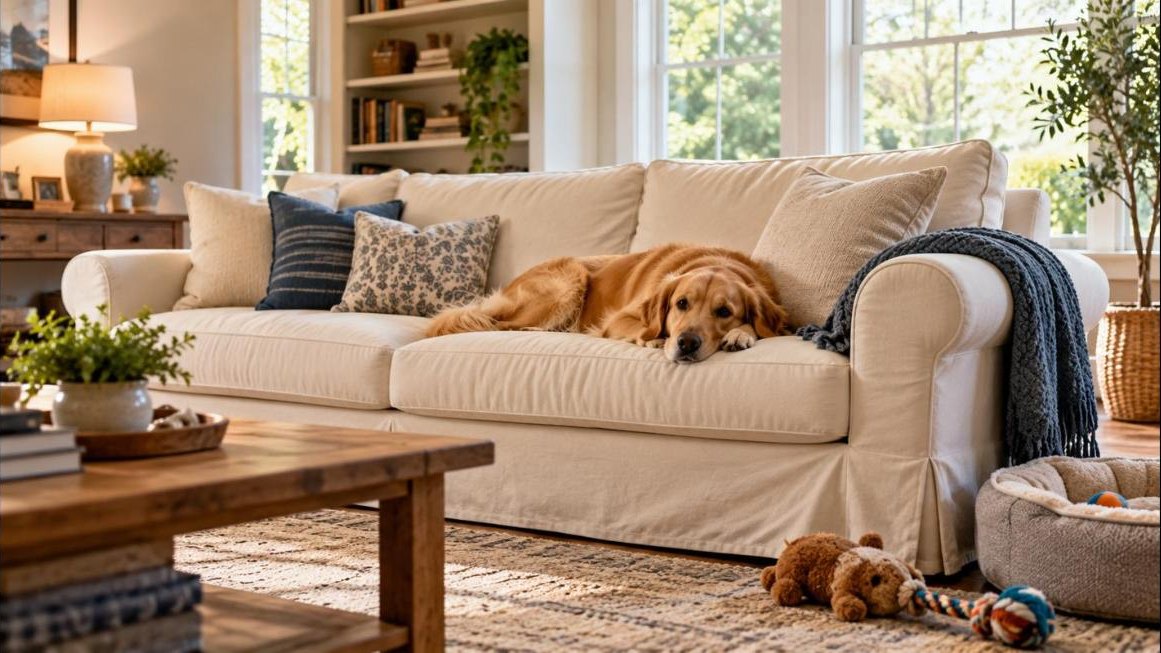
A white or cream sofa can survive children and pets if the cover is one of three things: a performance fabric with a liquid-repellent finish and a rub count above 30,000 Martindale, a fully removable and machine-washable slipcover (ideally with a spare set), or a pigmented (protected) leather that wipes clean. Untreated linen, cotton velvet, bouclé and aniline leather in pale colours will mark permanently within months in a busy household. Choose warm off-white over optical white; it hides far more.
Pale sofa fabrics ranked for family life
| Cover | Stain resistance | Cleaning | Pet claws | Verdict |
|---|---|---|---|---|
| Solution-dyed acrylic or olefin performance fabric | High; many are bleach-cleanable | Wipe, or dilute bleach solution where the maker allows | Good; tight weave | Best overall |
| Polyester performance weave with repellent finish | High at first; finish wears in 3 to 5 years | Blot and mild soap | Good | Very good |
| Washable cotton or cotton-linen slipcover | Low, but irrelevant | Machine wash at 30 to 40°C; air dry to avoid shrinkage | Fair | Very good if you will actually wash it |
| Pigmented (protected) leather | High | Damp cloth | Scratches show; fair | Good, not for cats that scratch |
| Microfibre | Medium to high | Soap and water or alcohol depending on code | Good; nothing to snag | Good |
| Bouclé, chenille, loose weaves | Low; loops trap dirt | Professional | Poor; claws pull loops | Avoid |
| Untreated linen, cotton velvet, aniline leather | Low | Professional | Poor to fair | Avoid in pale colours |
Look for the cleaning code on the label: W (water-based cleaner), S (solvent only), WS (either), X (vacuum only; avoid). Aftermarket fabric protector sprays help for a year or so and need reapplying. The full fabric comparison is in the sofa fabric guide and upholstery types in sofa upholstery explained.

The three specifications that decide everything
Removable, washable covers. This is not a nice-to-have. A light sofa whose covers cannot come off will eventually have a mark you cannot remove, and that mark is permanent. Covers that unzip and go in a domestic washing machine turn a catastrophe into a Tuesday.
Solution-dyed performance fabric. The colour is in the fibre rather than on it, so the fabric tolerates aggressive cleaning and, on some grades, diluted bleach. Olefin and solution-dyed acrylic are the strongest performers; performance polyester is close behind.
Texture, not flat weave. A woven texture or a subtle pattern hides small marks far better than a smooth flat surface. Pure white smooth cotton shows everything; a textured off-white weave with a slight slub shows very little.
Get these three and a light sofa is viable. Miss any of them and it is not.
Choose off-white, not white
True white is unforgiving and also rare in upholstery. Oatmeal, cream, greige, bone and sand all read as light in a room while hiding dust and minor soiling dramatically better. The visual effect at a distance is nearly identical and the practical difference is enormous.
Avoid very pale cool greys, which show every mark the way white does without the brightness that justifies it.
Slipcovers done properly
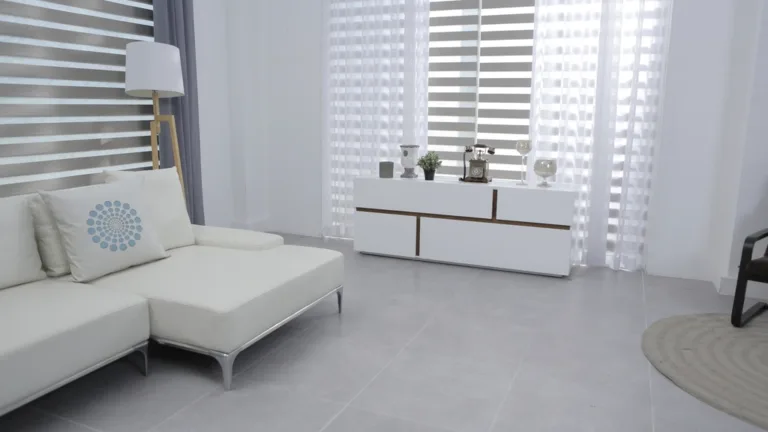
A sofa designed for slipcovers, with a cover tailored to the frame, looks intentional. A generic stretch cover over a standard sofa looks like a generic stretch cover. If you want the washable route, buy a sofa from a maker who sells it that way.
Buy a second set of covers at the time of purchase. Fabrics are discontinued, and having a spare set means you can strip and wash without the sofa sitting bare for a day. Wash cold, never tumble dry on heat, and put the covers back on slightly damp so they settle to the frame as they dry.
Fabric protection: what works
Factory-applied protection at the point of manufacture is generally more effective and more even than an aftermarket spray, and it is often a modest cost option. Aftermarket sprays do work but need reapplying every six to twelve months and after every deep clean.
Extended protection plans sold at the till are a different matter. Read the exclusions before buying: many exclude accumulated soiling, pet damage and anything not reported within a short window, which covers most of what actually happens.
Pets specifically
Light fabric and dark pets is the worst combination for hair visibility, and vice versa. If you can choose the sofa shade to roughly match your animal, do.
For claws, the key is a tight flat weave with no loops. Avoid bouclé, chenille and loose linen entirely. Performance polyester and microfibre are the practical choices. Leather is excellent for hair and poor for claws.
A washable throw over the favourite corner is not a design failure. It is the single most effective intervention available, and it costs twenty dollars.
Children specifically
The main threats are food, drinks, felt pens and the general transfer of whatever is on their hands. Removable covers handle almost all of it. A rule that food stays at the table handles the rest, imperfectly.
Keep a stain kit ready: a clean white cloth, a spray bottle of cool water, a mild pH-neutral detergent, and for pen marks, an alcohol-based solvent tested on a hidden seam first. Speed matters more than product; almost anything comes out in the first ten minutes and almost nothing comes out after a week.
A realistic maintenance routine
- Weekly: vacuum with an upholstery attachment, including under the cushions. Grit abrades fibres from the inside and dulls light colours faster than stains.
- Weekly: rotate and flip cushions so soiling and compression spread evenly.
- Monthly: spot-clean any marks before they set.
- Every three to six months: wash the covers, or deep-clean the fabric if covers are fixed.
- Annually: reapply protector if you use an aftermarket product.
Spot cleaning method
Blot, never rub, because rubbing drives the stain into the fibre and distorts the weave. Work from the outside of the mark inwards to avoid spreading a ring. Use as little liquid as possible. Dry with a fan or a hairdryer on cool rather than letting it air dry slowly, which is what causes water rings. And always test on a hidden area first, even with water.
The honest conclusion
A light sofa in a family home is a choice to do a little more maintenance in exchange for a brighter room. If that trade sounds fine, specify washable covers in a textured solution-dyed off-white and you will be happy. If it sounds like a chore you will not keep up with, buy a mid-tone performance fabric and put the light colour on the walls, the rug and the cushions instead, where it costs nothing to replace.
When this does not apply
If nobody will wash a slipcover or wipe a spill the same day, no pale fabric stays pale; a mid-tone textured weave hides more than any treatment protects. Check the care label before using bleach; it is safe only on solution-dyed fabrics whose maker says so.
Related guides

Written by gautam995576@gmail.com
Furniture buying editor focused on practical room planning, material checks, and clear decision guidance.
Related furniture guides

How to Buy Furniture More Sustainably (Without the Greenwashing)
What sustainable furniture really means, which certifications are worth trusting, and how buying for durability beats chasing eco labels that don't mean…
Traditional Sofa Styles Explained: Chesterfield to Camelback
A plain-language guide to the classic sofa silhouettes, where each came from, which rooms they suit, and how to tell a good…
How to Choose a Sofa for Your Space and the Way You Live
Choose a sofa by three numbers: two-thirds of the wall, a 90 cm walkway, and seat depth that suits how you sit.…